
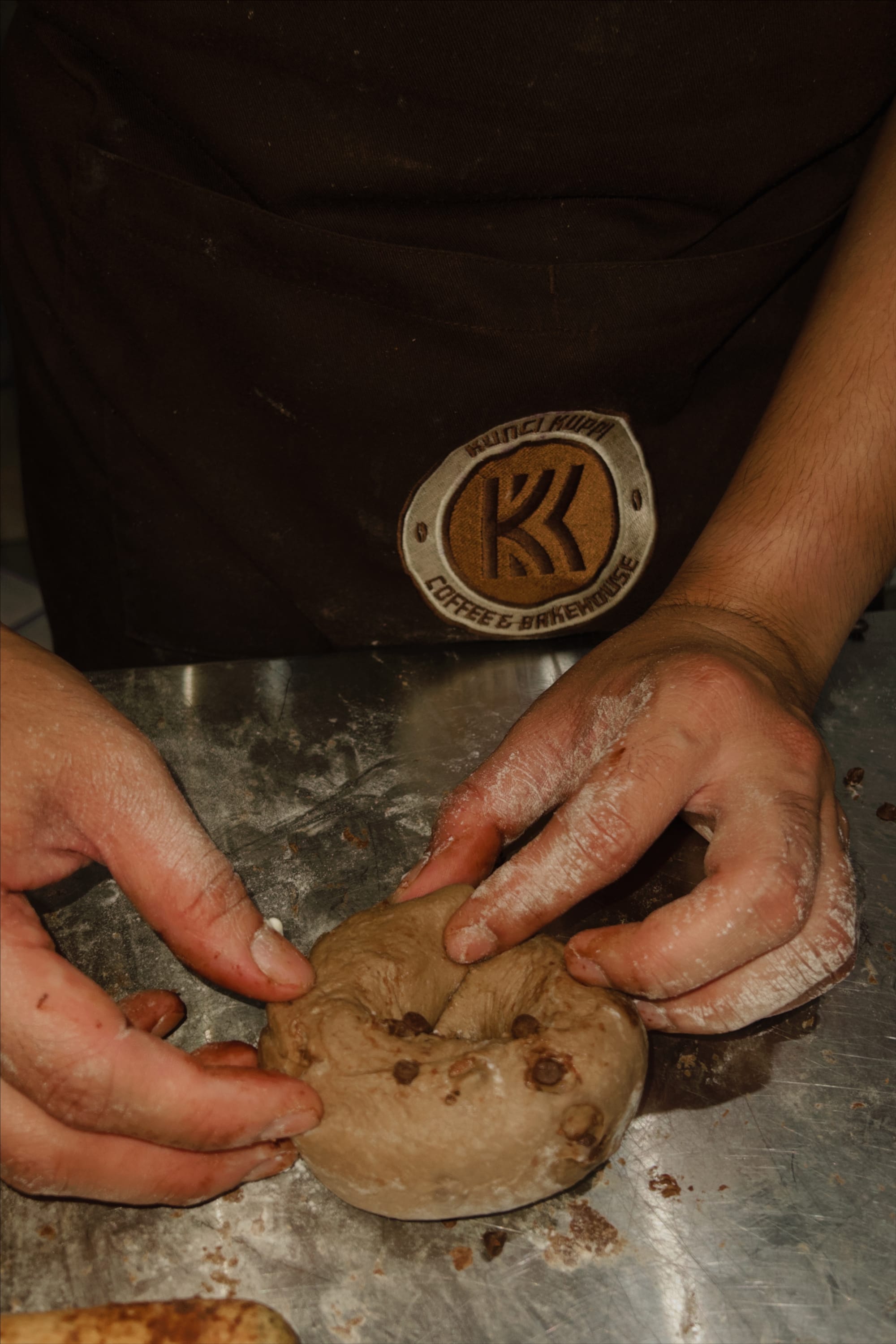
When we started in 2023, artisan bread was still not something people commonly looked for in Banyuwangi.
Most of what we knew at the time was supplied to hotels, villas, or only available in a few places—not something people would normally go out and buy from a bakery.
Our bread story at Kunci Kuppi has taken time, with plenty of learning along the way.
We were not only learning how to make the bread. We were also learning what people here enjoyed, what was still unfamiliar, and how we could adjust things without losing the character of the bread itself.
Focaccia was one of our earliest examples.
When we first introduced it at Kunci Kuppi, the response was quite mixed. Some customers were curious and enjoyed it immediately, while for others, the texture and character of focaccia were still something new.
Over time, as we kept making it and listening to feedback, we slowly found the kind of focaccia that worked for Kunci and for the people who came here.


Old Focaccia - 2023
For some, the crust was unfamiliar. For others, it was the chew, the olive oil, or simply the fact that it was very different from the softer breads they were used to.
That first version showed us that making the bread was only half of the work. We still had to understand what kind of focaccia we actually wanted to make.
So we kept working on the texture, flavour, fillings, and overall balance, slowly shaping it into something that felt more like Kunci Kuppi without losing the character that made focaccia interesting to us in the first place.
That process became part of how we approached bread at Kunci Kuppi.


We never wanted to take something from somewhere else and simply place it on our counter.
Instead, we try to understand what makes each bread interesting in the first place, then work through it in our own way—with the ingredients available to us, our fermentation, our equipment, our climate, and ultimately our own taste.
The goal was never to make the bread more familiar just for the sake of familiarity. We wanted it to feel natural at Kunci Kuppi while still keeping the character that made us curious about it in the first place.
Along the way, we were lucky to meet guests who had grown up with these breads themselves.
One of them was born in the hometown of focaccia. After trying ours, she simply told us, “add oregano.”
That comment stayed with us.
Another time, a small group of Italian guests ordered our focaccia with cappuccino. They told us that back home, dipping focaccia into cappuccino was something they enjoyed for breakfast.
So of course, we tried it too.
And honestly, it was so good. We never expected that combination to work as well as it did.
Somehow, this bread we had been learning and adjusting in Banyuwangi suddenly felt connected back to the place it came from, just through a very simple breakfast.
Such small comments, but we remembered them.
Sometimes it is not about changing the recipe immediately. It is simply about hearing how someone else understands the same bread.
Those little conversations gave us another way to look at what we were making, alongside all the trials, mistakes, and batches we kept going through in the kitchen.
And somehow, those small moments became part of the way we learned.


Our Bread Journey at Kunci Kuppi
Focaccia
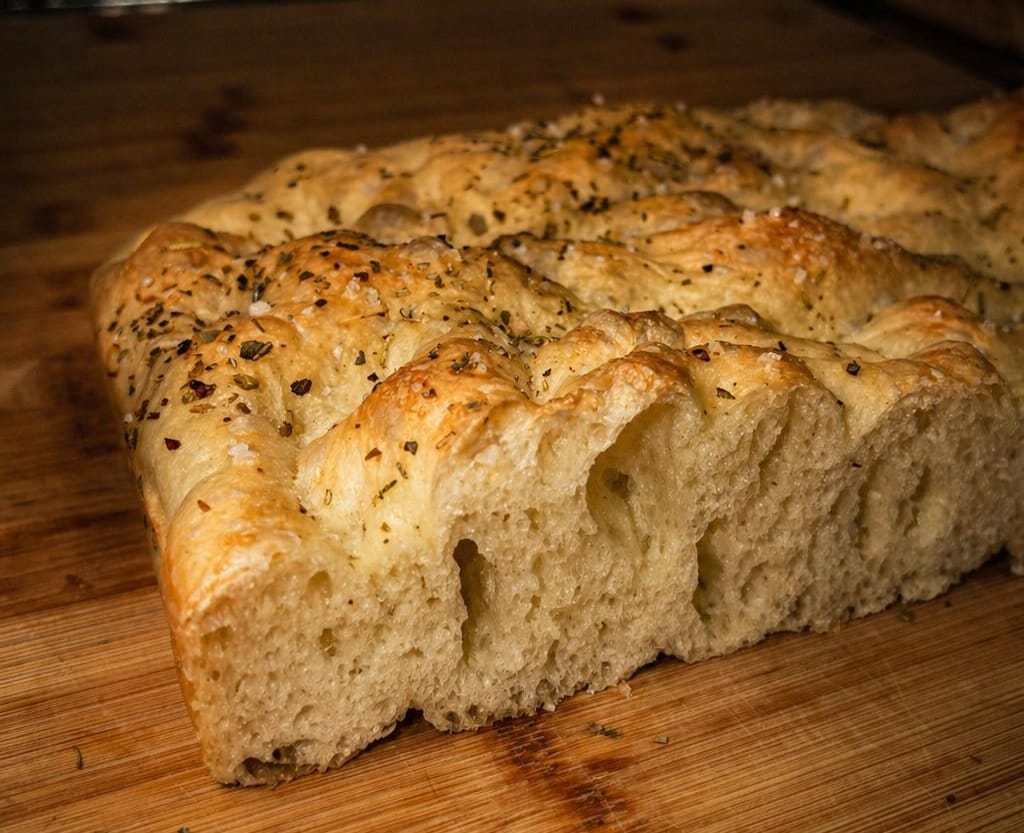
What became interesting later was how our own version of focaccia slowly took shape.
We kept it quite dense, but still soft inside, and over time that became one of the characteristics people started recognising from ours.
A few customers even told us they had tried focaccia elsewhere, including in Ubud, where the texture felt much harder to them. Ours felt more familiar and easier to enjoy.
That stayed with us.
It made us realise that understanding a bread does not always mean reproducing it exactly. Sometimes the more important part is understanding why it works, then deciding what still makes sense for the way we cook and serve at Kunci.
From there, we became more curious about dough, fermentation, texture, and all the small decisions that can completely change the result.
That eventually became part of our Kaizen mindset at Kunci — keep learning, keep adjusting, and never assume a recipe has to stay exactly the same forever.


After focaccia came another bread that became important to our story: RoKu.
Around early 2024, Roti Macan’s cranberry cheese was becoming difficult to miss. The small Bandung bakery had people queueing from early in the morning for it, and cranberry cheese was the bread everyone seemed to be talking about.
We were curious too.
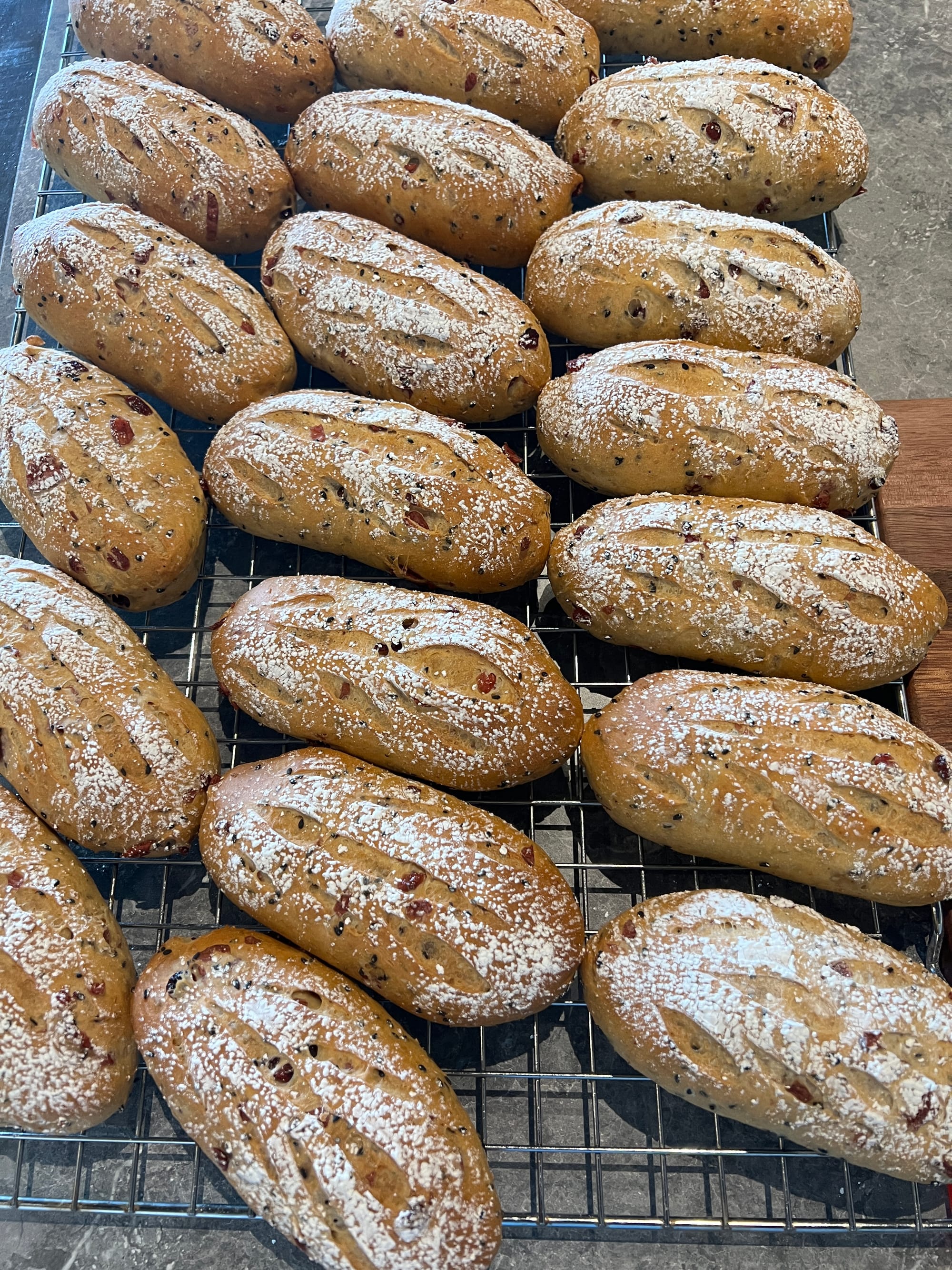
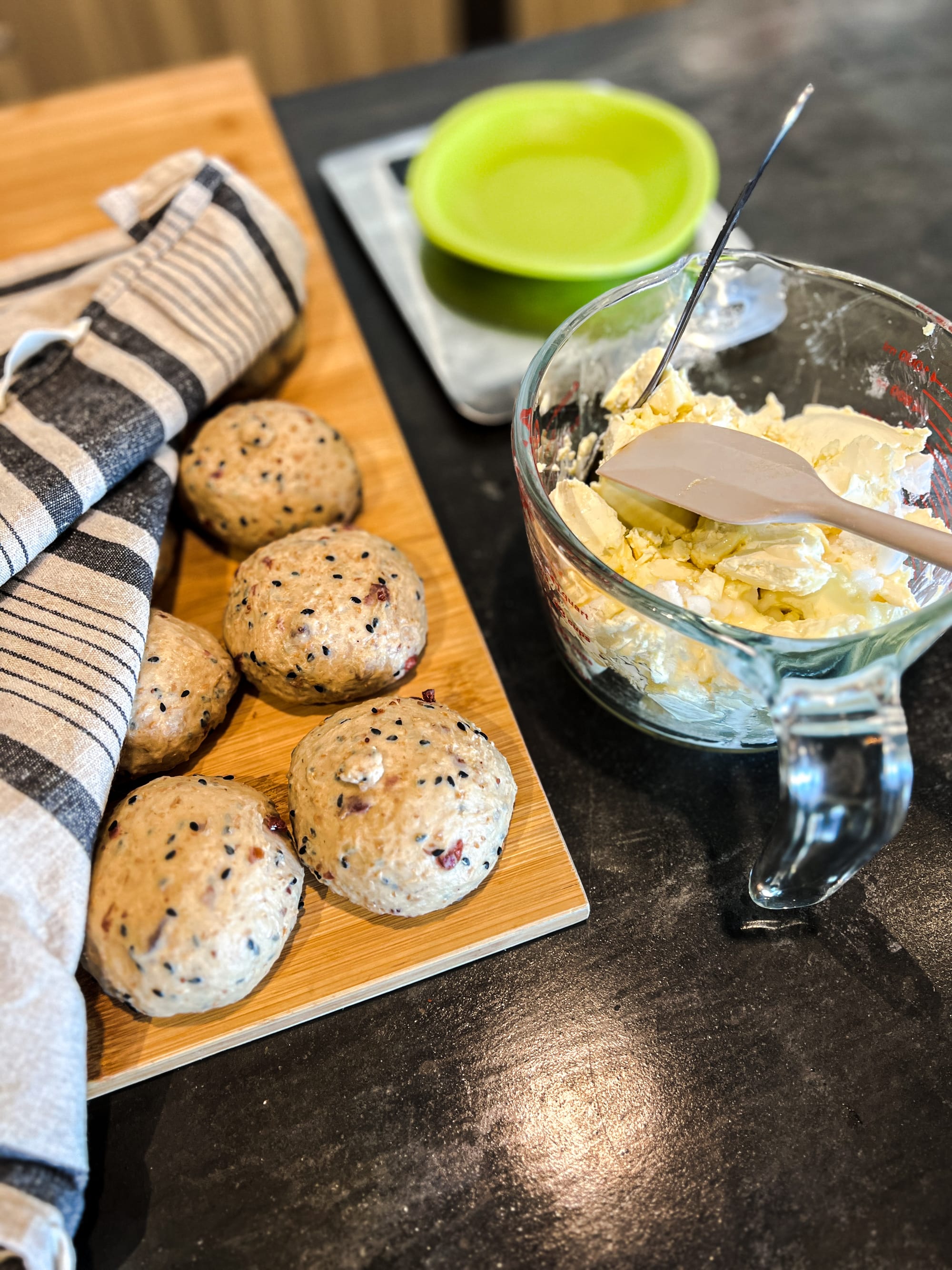
But rather than trying to reproduce it exactly, we took the cranberry-and-cheese idea as a starting point and began working on our own version — changing the dough, texture, appearance, and the balance of the filling until it became something that suited Kunci Kuppi.
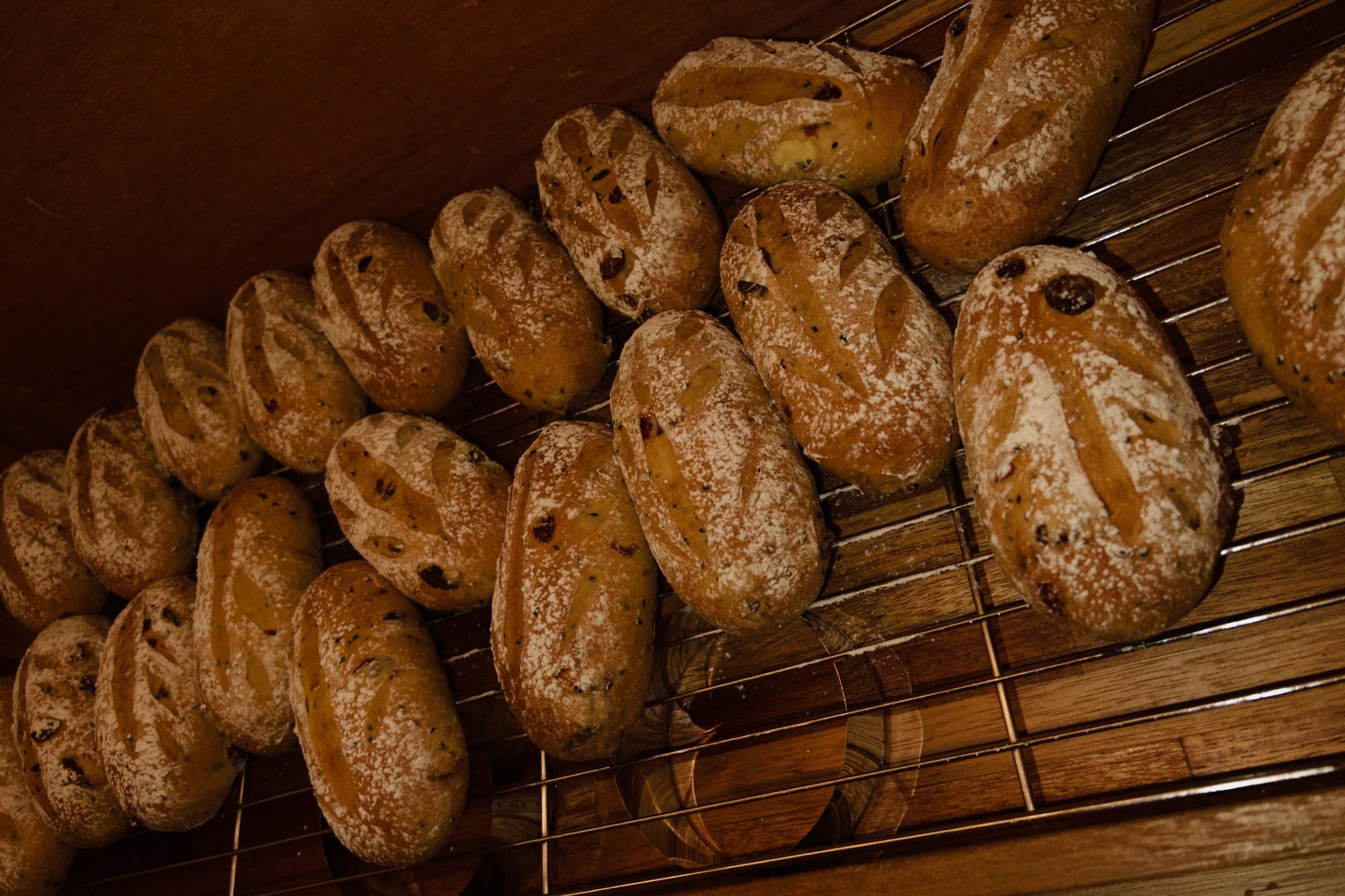
That bread became RoKu Cranberry Cheese.
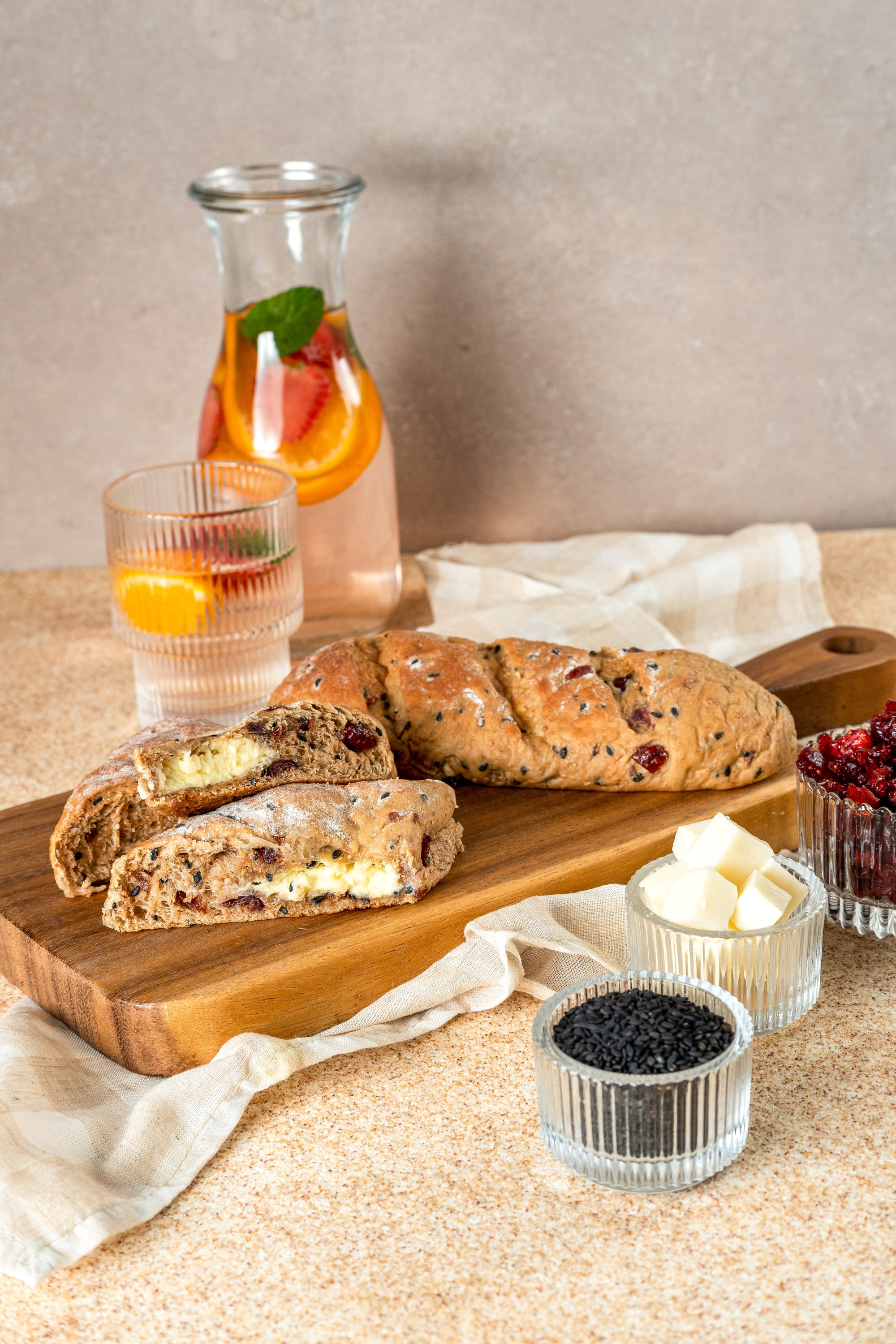
RoKu Cranberry Cheese
That version eventually became one of the breads people knew us for. And once RoKu (Roti Kunci) had found its place, we kept exploring it.
Later came our own RoKu Choco Cheese, taking the same idea in a different direction while keeping the identity we had started building around the bread.
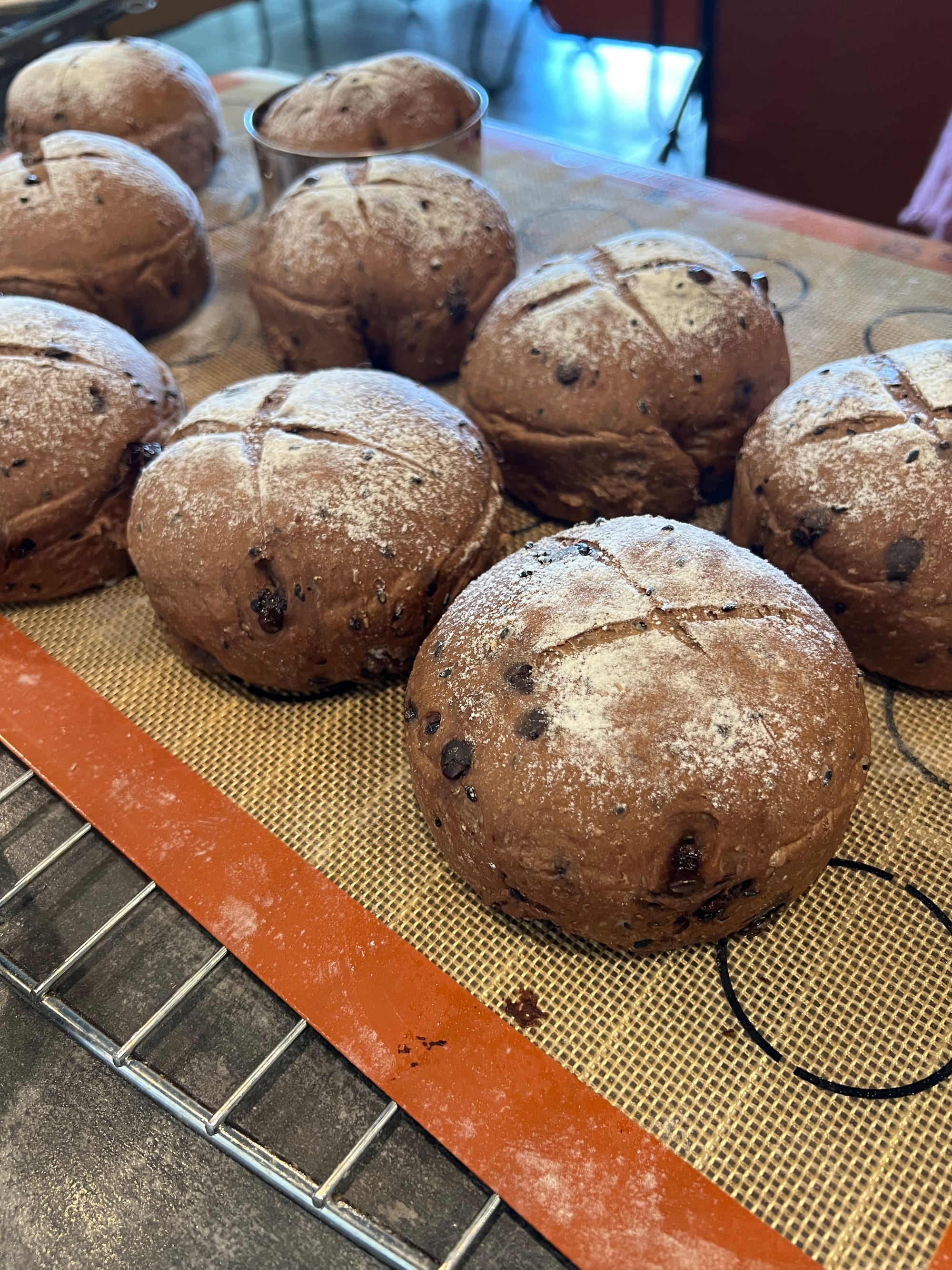
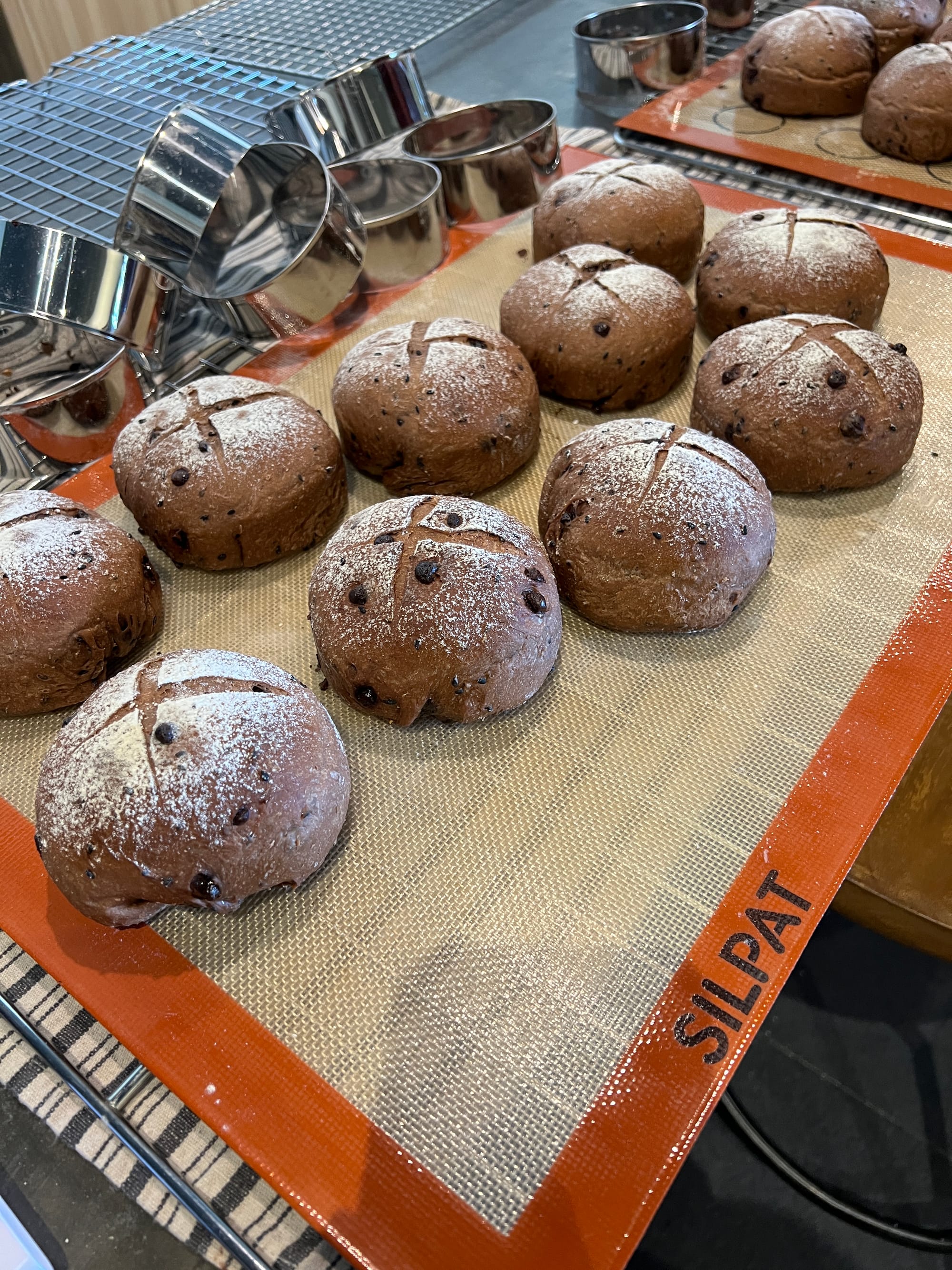
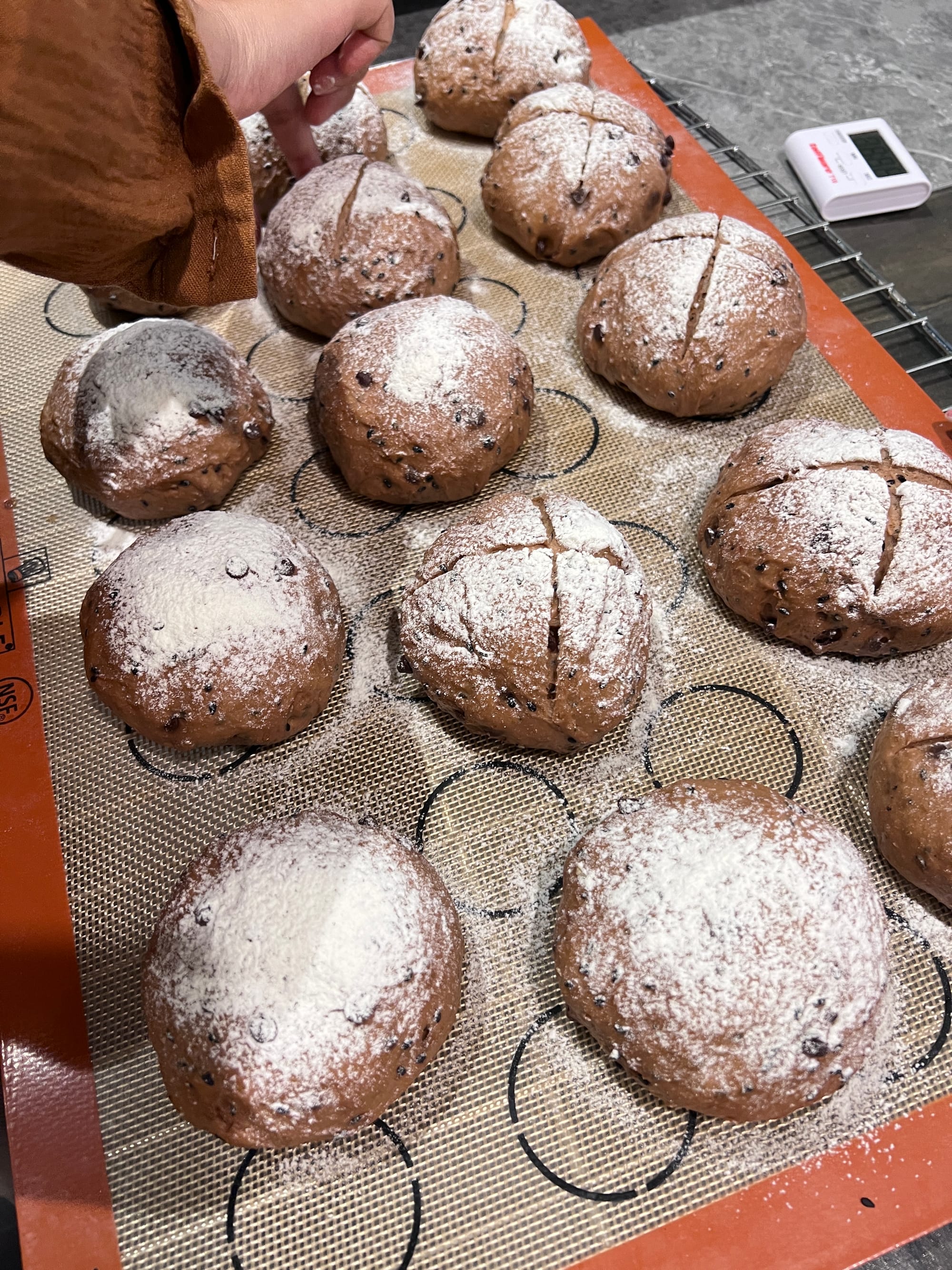
RoKu Choco Cheese
RoKu eventually became one of those breads that many people started knowing us for. There was one small moment that made me realise this.
We once ran into one of our customers at another coffee shop. The owner did not know that they were also our customer, and while talking about bread, he recommended “Roti Macan at Kunci Kuppi.”
Our customer immediately replied, “Oh, RoKu?”
Haha.
That moment stayed with us because somehow RoKu had already become the name they knew it by. And even after all this time, we are still changing it. Just this August 2026, we changed the recipe again.
For quite a long time, RoKu used a hybrid fermentation method — sourdough together with commercial yeast. It worked well for us, but we wanted to see if we could take it a little further without changing the identity people already knew.
So this time, we moved to full sourdough. Why? Because we were bored.
Haha, no.
We wanted to bring a little more depth and fermentation character into the dough, while still keeping RoKu familiar.
We were also curious about what a longer fermentation could do beyond flavour.
With full sourdough, the starter has more time to work on the flour during fermentation. Some people find long-fermented bread easier to digest, although RoKu still contains wheat and gluten, so of course it is not a gluten-free bread.
For us, it was simply another thing worth exploring.
And surprisingly, moving to full sourdough also made more sense for our Bakehouse.
With commercial yeast, things can move quite fast. Once the dough is ready, the team has to follow its timing.
Full sourdough gives us a longer fermentation window, which means we have more room to organise production around everything else happening in the Bakehouse.
So the change was not only about flavour.
It also made the way we work a little better.
And I think that is quite similar to how RoKu has changed from the beginning. We rarely change everything at once. Usually we find one thing we think can be better, try it, and see where it takes us.
The RoKu we make today is not exactly the same RoKu we started with.
But when you eat it, it should still feel like RoKu.
From there, our curiosity moved again.
We started exploring breads with completely different textures, fermentation, and techniques.
That led us deeper into sourdough, bagels, shokupan, salt bread, and the other breads that followed.
Sourdough
Sourdough is one of the breads that many guests specifically look for when searching for artisan bread in Banyuwangi.
But honestly, sourdough was also one of the most challenging breads for us to develop.
And at the time, we also noticed that sourdough was starting to become more popular in Indonesia, even though not everyone really knew what the word meant yet.
Sometimes sourdough is treated almost like the name of a particular bread — a round loaf, a crusty bread, something that looks rustic.
But sourdough is really more about how the dough is fermented.
In the simplest way we usually explain it, instead of relying on commercial yeast, sourdough uses a living starter made from flour and water, where wild yeast and bacteria naturally work together to ferment the dough.
So two breads can look almost exactly the same, but that does not necessarily mean they were made the same way.
And maybe because sourdough had become a trend, the word itself also started appearing everywhere. For us, that made it even more important to understand what we were actually doing rather than simply putting “sourdough” on the menu.
When we first became interested in it, one of our biggest questions was simple:
Would people in Banyuwangi actually enjoy this kind of bread?
At that time, naturally fermented sourdough—with its stronger acidity, rustic crust, and distinct texture—was still unfamiliar to many local customers.
Because of that, we decided not to rely only on trial and error.
Instead, in early September 2024, we travelled to Solo, Central Java, to learn directly from Mas Wahyu at @Krutadough, who had much more experience working with artisan bread and sourdough.
Learning from him gave us a much deeper understanding of fermentation, dough behaviour, texture development, and many of the small details that are difficult to understand from recipes alone.
That trip became an important part of how we started taking sourdough and fermentation more seriously at Kunci.


But learning the approach in Solo was only the beginning.
When we returned to Banyuwangi, the real learning started. We began testing what we had learned with our own flour, equipment, environment, and the way we wanted sourdough to taste at Kunci.
At the time, we were still struggling with inconsistent results. Some batches worked beautifully, while others behaved differently even when we thought we had followed the same process.
That was when we started understanding how much the environment around the dough matters. Kunci sits at around 500 metres above sea level, with temperatures often around 24°C and humidity that can reach around 90%. The conditions were different from Solo, and the fermentation did not always move in exactly the same way.
We started paying more attention to dough temperature, fermentation time, humidity, and how the dough was actually behaving that day. We also introduced a few simple tools to help us keep the process more consistent.
There is actually quite a lot behind this part, so we will probably cover it more deeply in our upcoming sourdough bread ebook.
After many rounds of testing, we gradually found our own approach — adjusting the fermentation, reducing the acidity slightly, and changing parts of the baking process until we reached the texture we were looking for.
The sourdough we make today still has the fermentation character we wanted, but with an acidity and texture that feel more comfortable for us to enjoy every day.


Something you can enjoy with butter, breakfast, sandwiches, or simply alongside a good cup of coffee.
Looking back, we feel grateful for that journey.
What once started as a question — would people here actually enjoy sourdough? — eventually became one of the clearest answers for us.
People did not need a lecture about sourdough. They needed a good first bite. So we started serving it in ways that felt familiar—breakfast, sandwiches, eggs, and dishes with sauces people already enjoyed.
If you are curious where to begin, many guests start with some of our sourdough favorites — from Rengganis and Kunci Breakfast, our best-selling take on a comforting sourdough sandwich, to Turkish Eggs with sourdough bread, sourdough paired with our housemade tomato dipping sauce, sourdough corned beef, beef pastrami, beef bacon, meatball marinara on sourdough, and other evolving creations from our hot kitchen.


The idea was simple: create dishes where the bread itself still offers a new experience, but the overall flavors feel welcoming and enjoyable.
As people became more familiar with our sourdough, we also started exploring what else we could do with the same dough.
We began making inclusion versions — sometimes adding chocolate through the dough for our Chocolate Sourdough, and sometimes making savoury versions with meat inside.
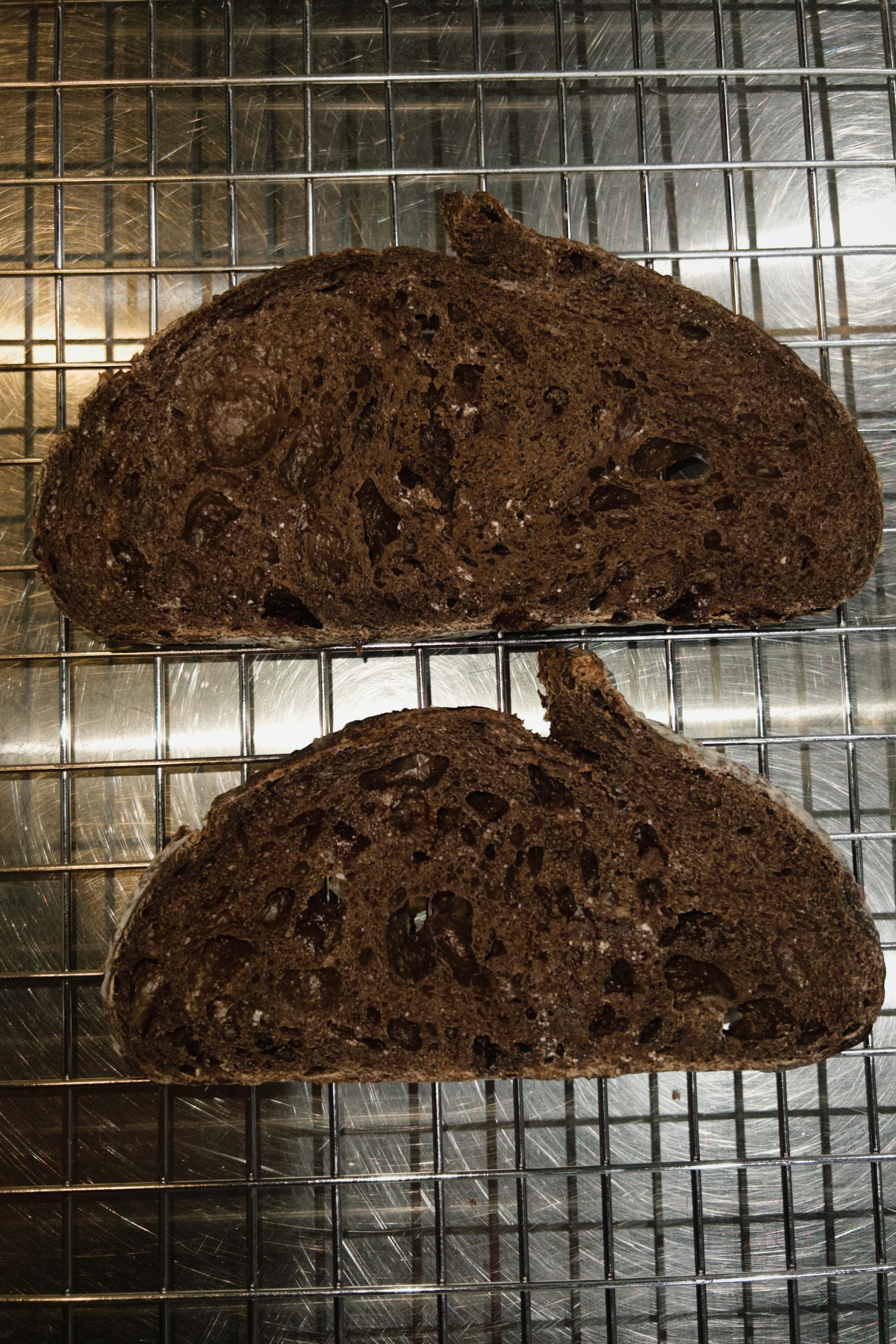
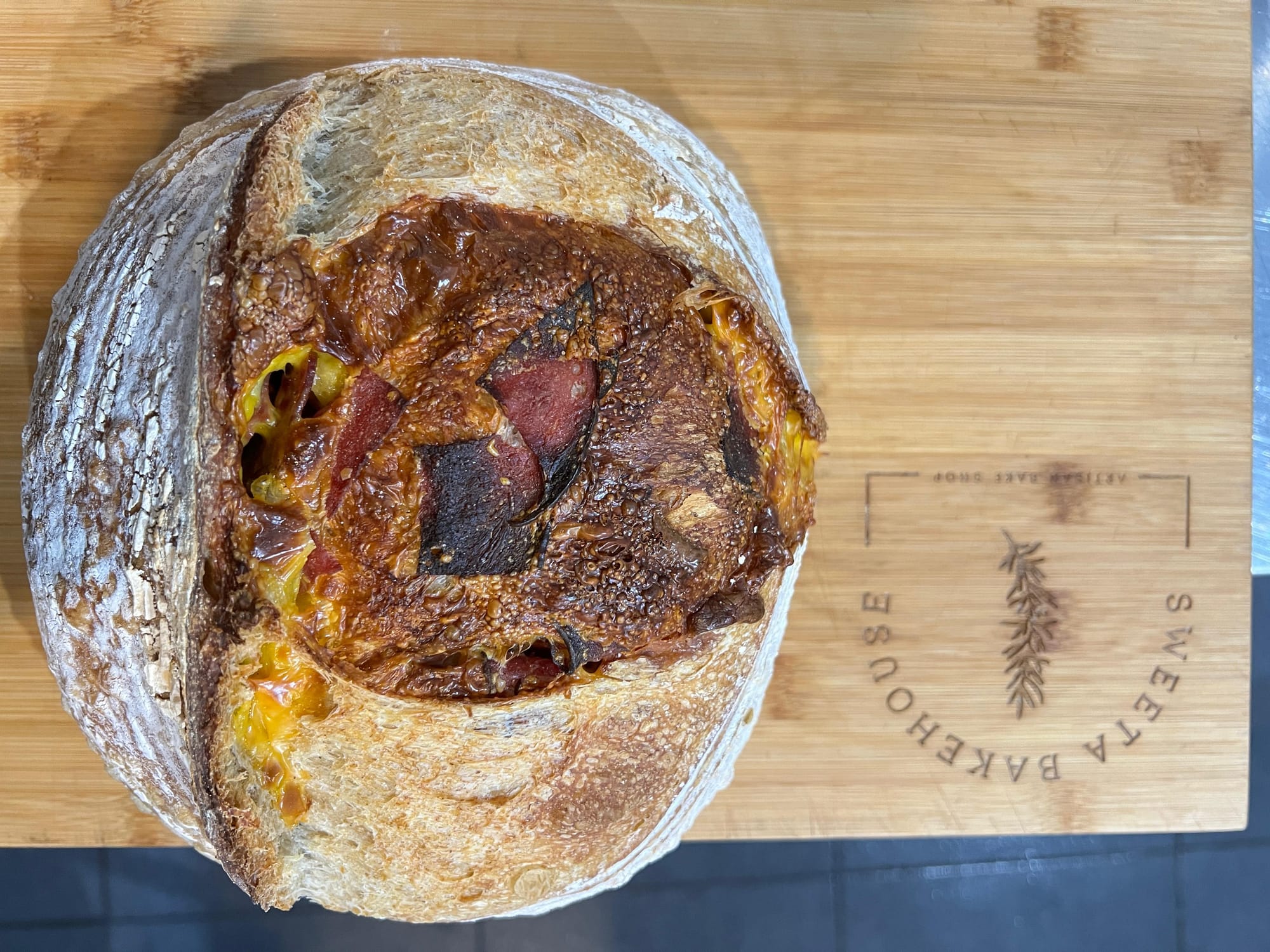
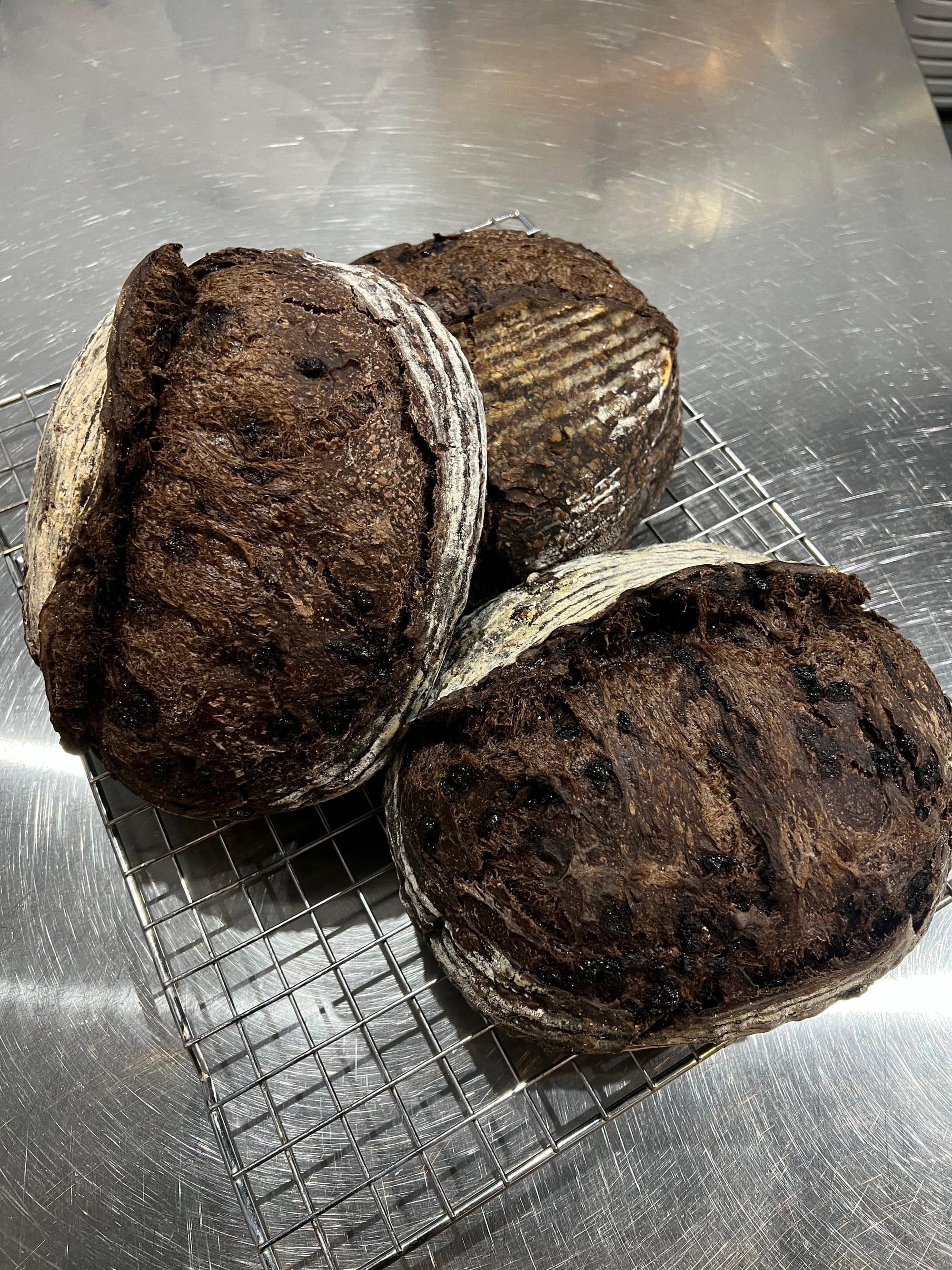
The plain sourdough is still where everything starts, but these versions can also be requested if you want something different. Because the ingredients and preparation are different, the price is also different from our regular plain sourdough.
Today, sourdough has become one of the breads many of our customers genuinely love, and over time, it has grown into one of the best-selling items at Kuncikuppi.
For us, that is a reminder that sometimes something unfamiliar does not need to be changed completely. Sometimes people just need a way to start enjoying it, and from there, the curiosity grows naturally.
Bagels
Our journey then continued to bagels — another bread that taught us a lot.
Bagels bring a completely different experience compared to regular bread.
Known for their signature chewy texture and satisfying bite, traditional bagels can feel very different from the kinds of bread many of us grew up with in Indonesia, where softer breads have long been more familiar and widely enjoyed.
Because of that, when we first introduced classic-style bagels at Kunci kuppi, the response was honestly quite challenging.
Some customers were curious about bagels, but the texture was also one of the first challenges we noticed.


For people who were more familiar with softer breads, the chew could feel quite unfamiliar.
And to be honest, we understood that.
We first started developing our bagel around November 2024. After a few months of testing, we released the first version in February 2025.
But not for long.
Once more people started trying it, the feedback became clearer. Some enjoyed the chew, while others felt it was still a little too much for them.
So we pulled it back from the menu and went back to testing.
Around that time, we also travelled to Malang and tried a bagel place there that quite a lot of people already enjoyed.
We were curious to taste it ourselves and understand what made their bagel work for the people there, especially because bagels were still not something most people were familiar with.
That experience gave us another point of view when we came back and continued working on ours.
When we came back, we continued testing with a clearer idea of what we wanted.
We did not want to make a soft bread and simply call it a bagel. The chew still mattered.
We were just trying to find the point where it still felt like a bagel, but was also easier for people here to enjoy on the first try.
By July 2025, after months of testing, pulling it back, changing things, and trying again, we finally brought it back to the menu.


This time, it was much closer to the bagel we wanted to have at Kunci.
One thing we noticed after serving it again was how quickly the texture changes as the bagel cools.
When it is still hot, the crumb feels softer and the outside has a little more crispness. After around 5–8 minutes, as the bread cools and the structure starts to firm up again, the chew becomes much more noticeable.
So if you prefer a softer bagel, we usually recommend eating it straight away. If you enjoy more of that classic bagel chew, give it a few minutes first.
Interestingly, some of our customers discovered the same thing on their own. Some eat it immediately, while others intentionally wait because they prefer the stronger chew.
For quite a few people, it also became their first time trying a bagel in Banyuwangi.
Once we were happy with the base bagel, naturally we started playing with it again.
That led to our Cranberry Cheese Bagel and Choco Cheese Bagel, which turned out to be some of the best-selling bagels we have made and are still favourites at Kunci today.
Then we started wondering what would happen if we took the bagel somewhere closer to home.
That is how our Klepon Bagel came along.
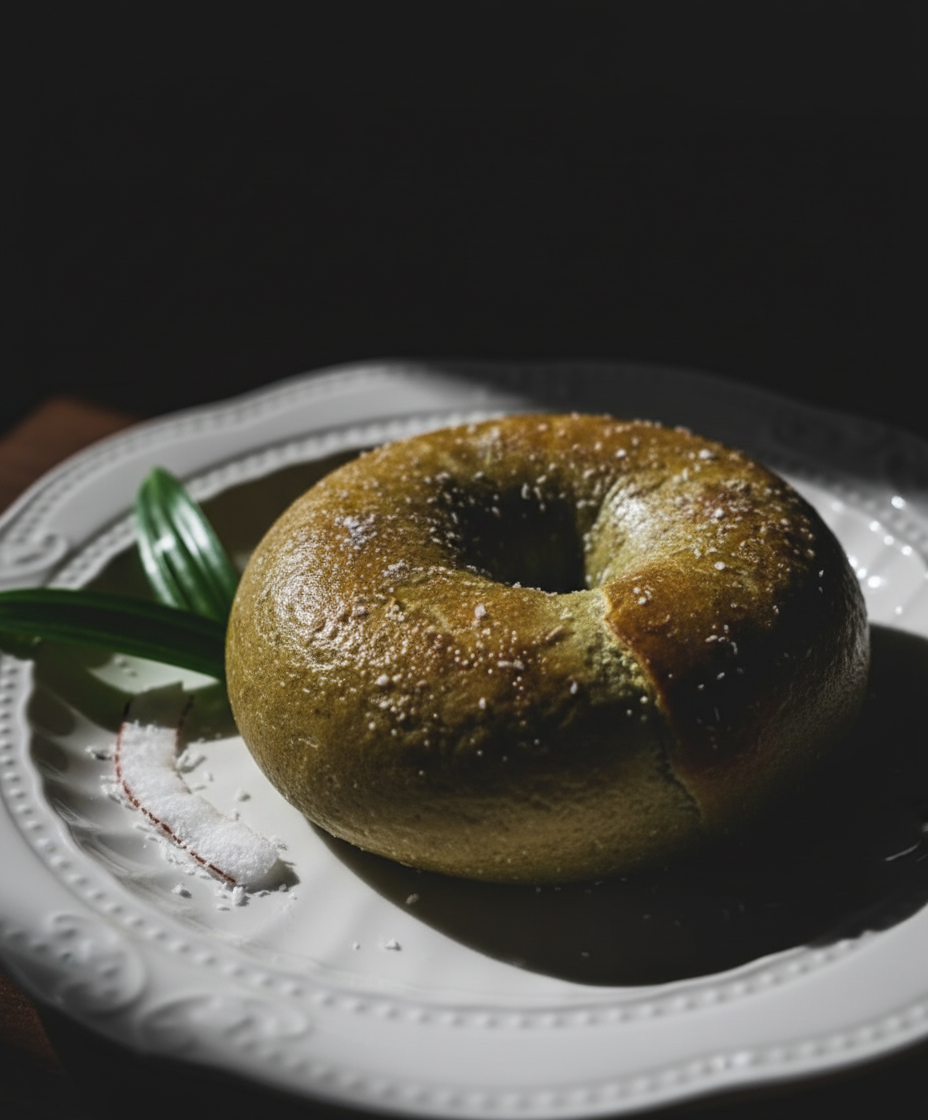
For this one, we use locally sourced arenga sugar, made from the sap of Arenga palms grown around our region. It has a deeper and more aromatic sweetness than regular sugar, with a character that immediately reminds us of many traditional flavours we grew up with here.
We brought that together with the familiar idea of klepon and put it into a bagel.
It sounds like two very different things meeting each other, and maybe that was exactly why we wanted to try it.
From something that initially felt quite unfamiliar to many of our customers, bagels slowly became something we could keep exploring — sometimes with flavours people already knew, and sometimes with ingredients that come from much closer to home.
Salt Bread
Our first encounter with salt bread happened almost by accident.
In September 2024, we were travelling to Solo and stopped by Sekutu, one of the coffee shops we wanted to visit while we were there.
That was the first time we tried salt bread.
And our first reaction was basically: how can something that looks this simple remind us of a croissant, but still feel completely like bread?
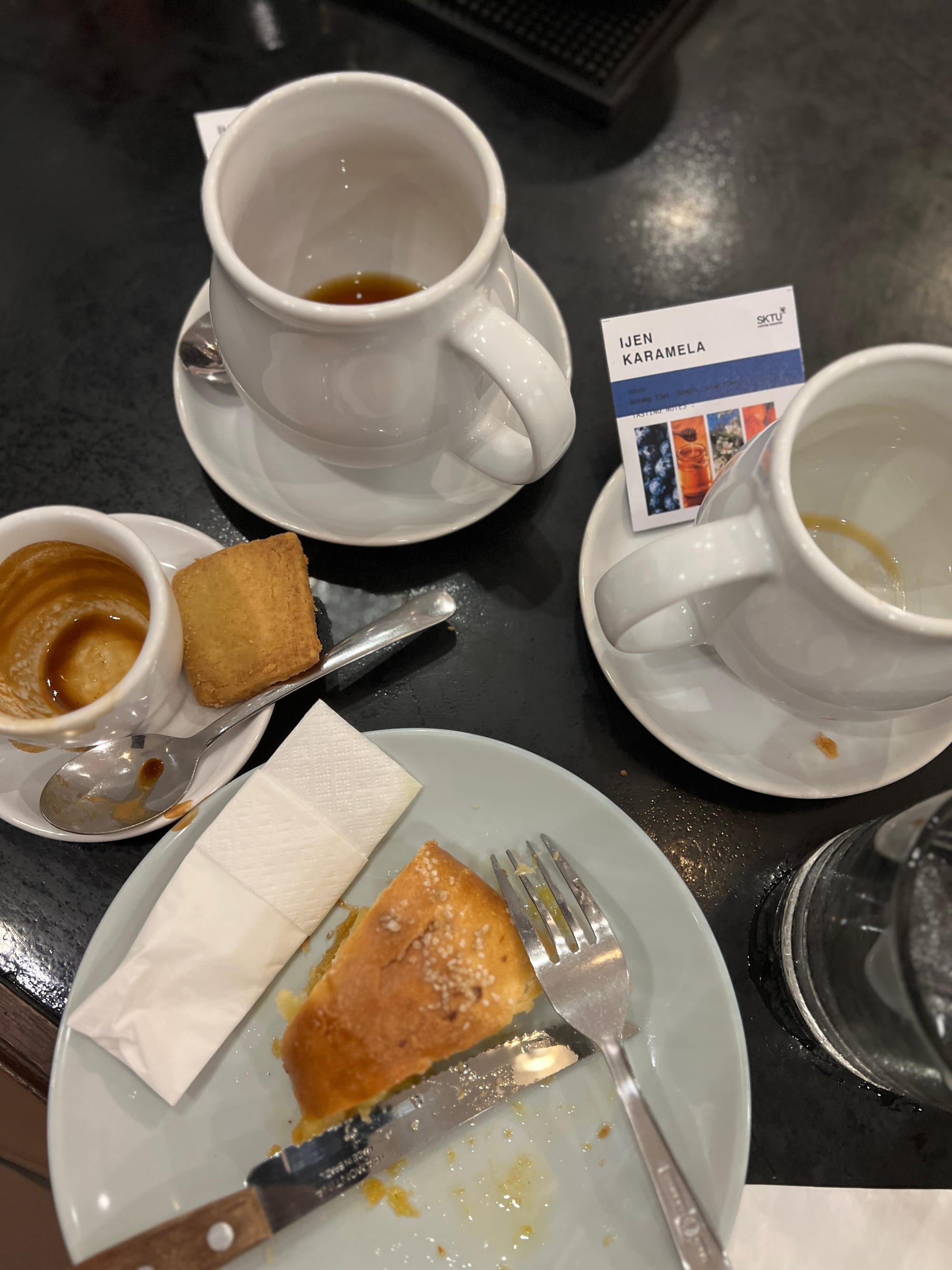
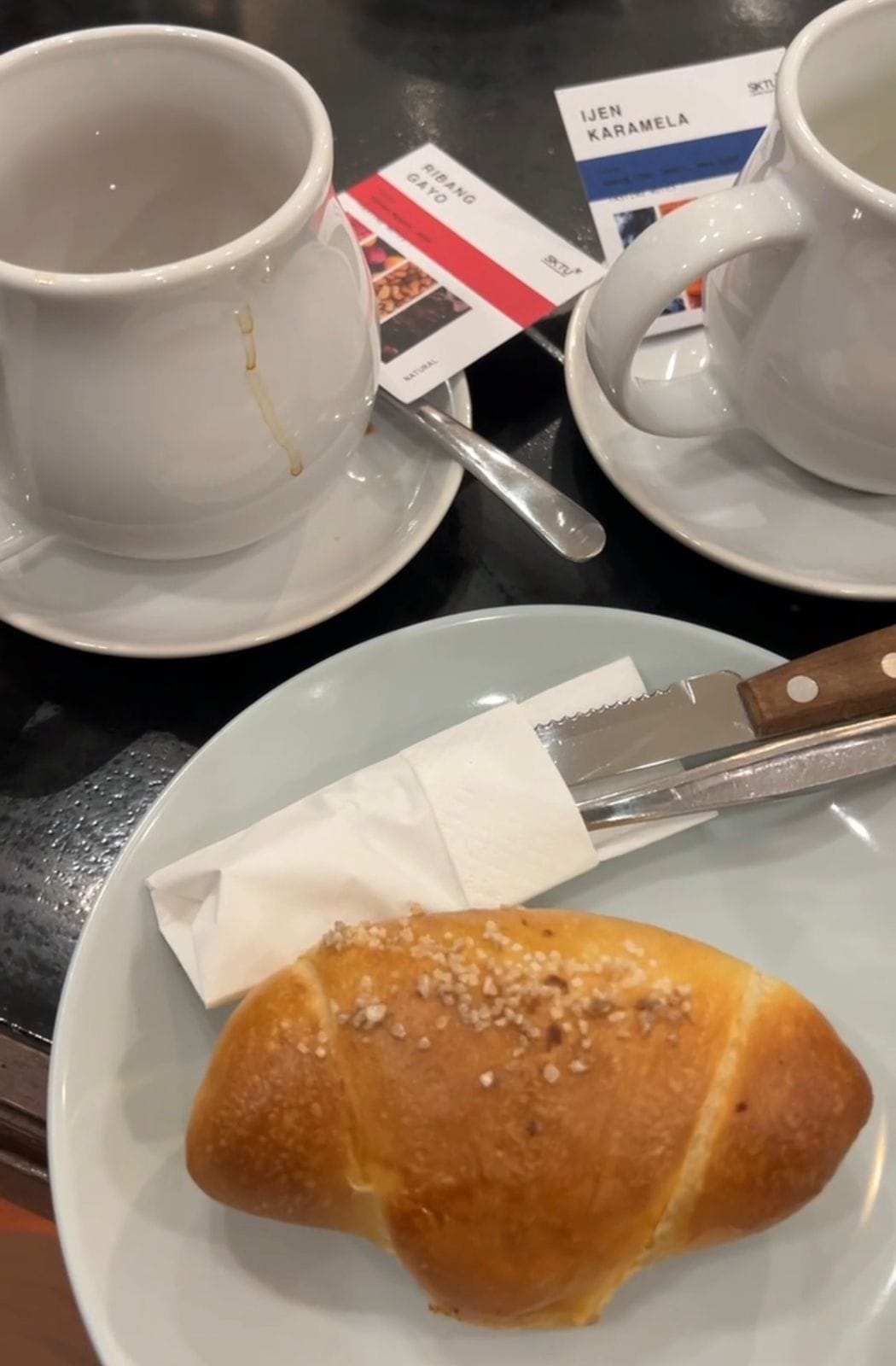
It had that buttery aroma and richness we usually associated with a croissant, even a little crispness underneath, but the texture was different. Softer, lighter, and much more bread-like.
We became curious immediately.
When we came back to Banyuwangi, of course we wanted to try making it ourselves. And that was when we discovered that something this simple was actually quite difficult to get right.
We tried quite a few different butters along the way — Elle & Vire, Golden Churn, Anchor, and several others.
Not because we wanted to make it complicated, but because every butter changed the bread a little. The aroma was different, the richness was different, even the way it melted into the dough was different.
We adjusted the recipe several times, played around with milk powder, and at one point even tried roasting the milk powder just to see what it would do.
Some experiments worked. Some did not really make enough difference to keep.
But that is probably what we learned most from making salt bread.
When there are only a few things in the bread, there is not much place to hide.
The dough has to be right. The butter has to work with it. And even the salt matters more than we expected.
At one point, we even bought a special tray made specifically for Salt Bread.
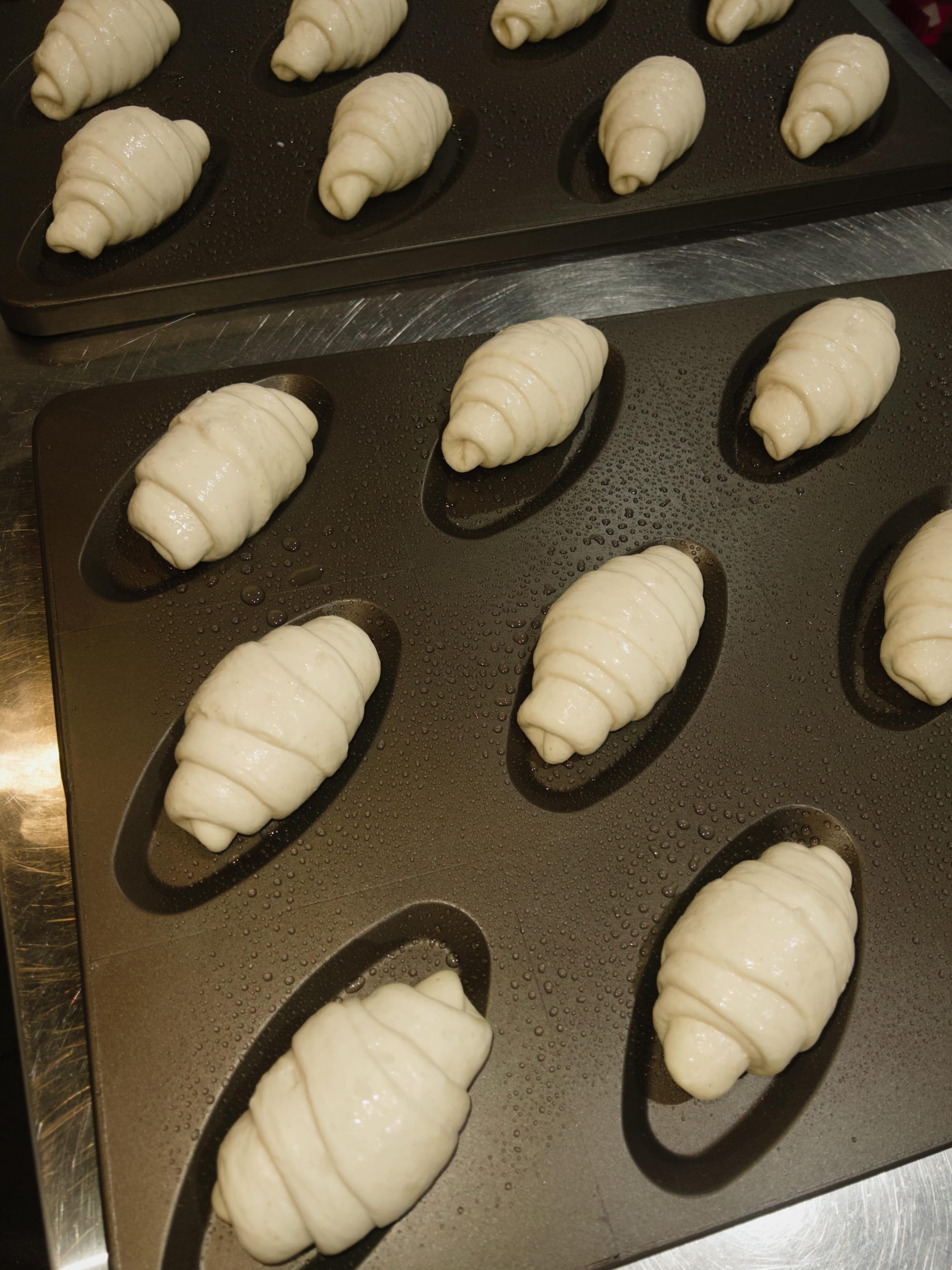
We realised that the tray itself was affecting the result more than we thought. Salt Bread naturally releases some butter while it bakes, and with a regular tray, that butter can spread too far away from the dough.
The special tray helps keep more of that melted butter around the base of each piece, so the bottom can bake in it and develop the crisp, buttery layer we were looking for.
It sounds like a very small detail, but it changed the bread quite a lot for us.
For ours, we use Maldon sea salt on top. We like the larger, flaky crystals because they do not just disappear into the bread. You get small pops of salt here and there, with a little texture, instead of simply making the whole bread taste saltier.
And after playing with the dough and baking it again and again, we also realised we did not actually want ours to be completely soft.
We like a little more crispness around the bottom and the outside, while keeping the inside soft and slightly chewy.
That contrast became one of the things we liked most about it, so we kept it.


And of course, once we were happy with the original Salt Bread, we started playing with it again.
That is how our Chocolate Salt Bread came along.
Our earlier version used Callebaut chocolate, and we actually kept it that way for quite some time. But recently we changed it again, this time using chocolate from Adore Cacao made with fermented and sun-dried cacao from Sulawesi.
The difference for us was not simply about making it more chocolatey or sweeter.
Adore brings a different cacao character — a little deeper, more aromatic, and with more going on behind the sweetness. We liked how that worked against the butter and Maldon sea salt already in the bread.
So just like the original Salt Bread, the chocolate version is still moving too.
Same idea, but we keep changing the small things whenever we find something that makes more sense for us.

And apparently, we were still not done with Salt Bread.
One of our latest experiments was our Ubi Ungu Salt Bread — made with Indonesian purple sweet potato that we steam, mash, and turn into a smooth, creamy filling.
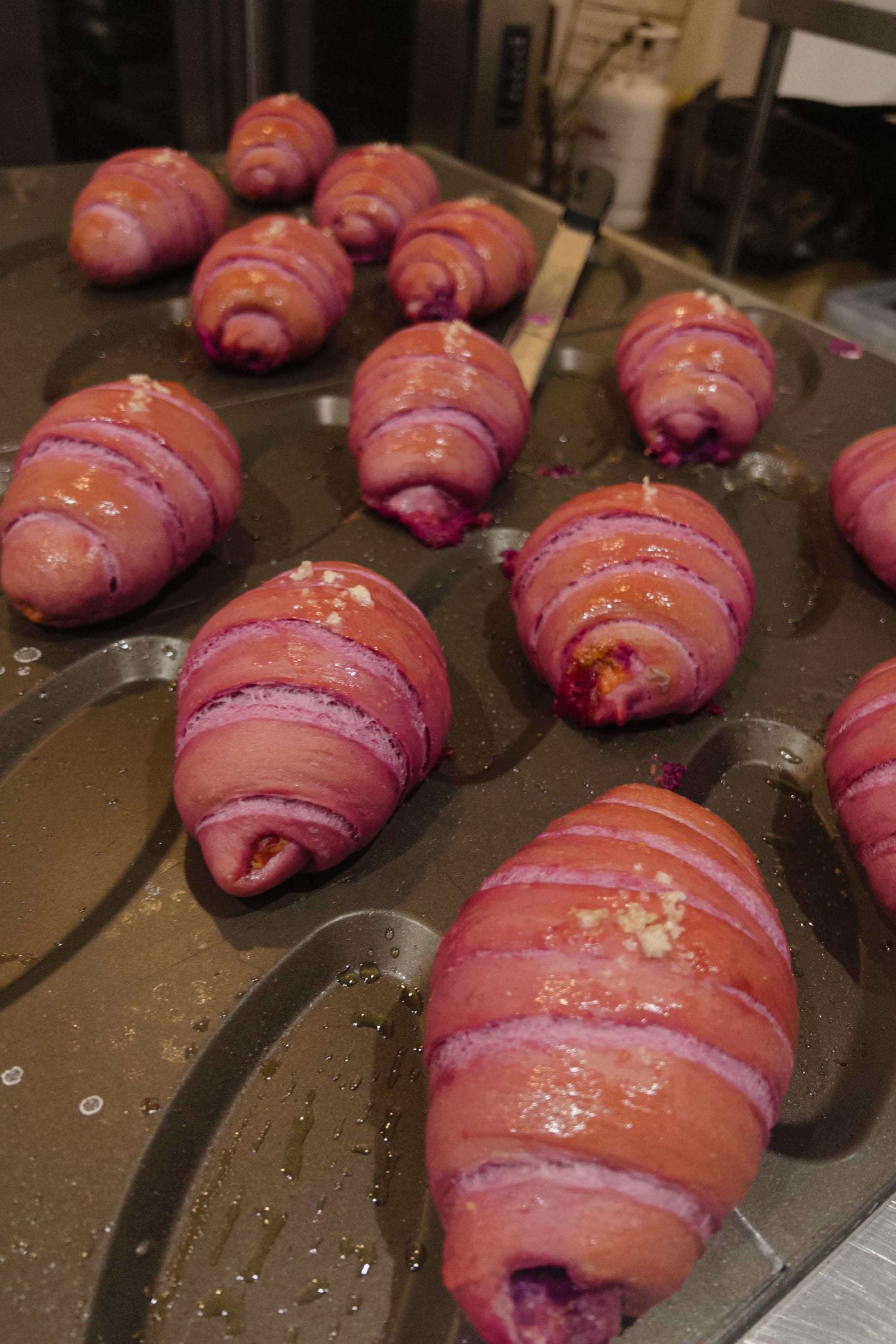
Inside, we pair it with mozzarella and butter, so you still get the buttery and slightly salty character of our Salt Bread, but with a soft, earthy sweetness from the ubi ungu and a little richness from the cheese.
It is probably one of the furthest versions we have taken from the Salt Bread we first tried in Solo, but somehow it still feels connected to the same idea.
Shokupan — Full Sourdough
Our Shokupan is made with full sourdough fermentation.
That sounds like a small detail, but for us it became one of the most challenging parts of developing this bread.
We had wanted to make shokupan for quite some time, but there was one thing we did not want to compromise: ours had to be full sourdough. Keeping it soft without commercial yeast meant paying close attention to fermentation time, dough strength, hydration, richness, and how far we could push softness without losing structure.
There were many adjustments along the way.
Too much fermentation and the dough could lose strength. Too little and we would not get the lightness we were looking for. The challenge was finding that balance where sourdough could still give us a beautifully soft crumb without making the bread feel dense or overly rustic.
The result is our own interpretation of Shokupan: naturally fermented, soft and fluffy, with a little more depth in flavour from the sourdough.
We use it for toast, sandwiches, and several of our menus at Kunci Kuppi, but it is just as enjoyable simply warmed on its own.
For us, this bread became another reminder that sourdough does not always have to be crusty, chewy, or rustic.
Sometimes, it can be incredibly soft too.


And that curiosity around softer bread eventually took us somewhere else as well.
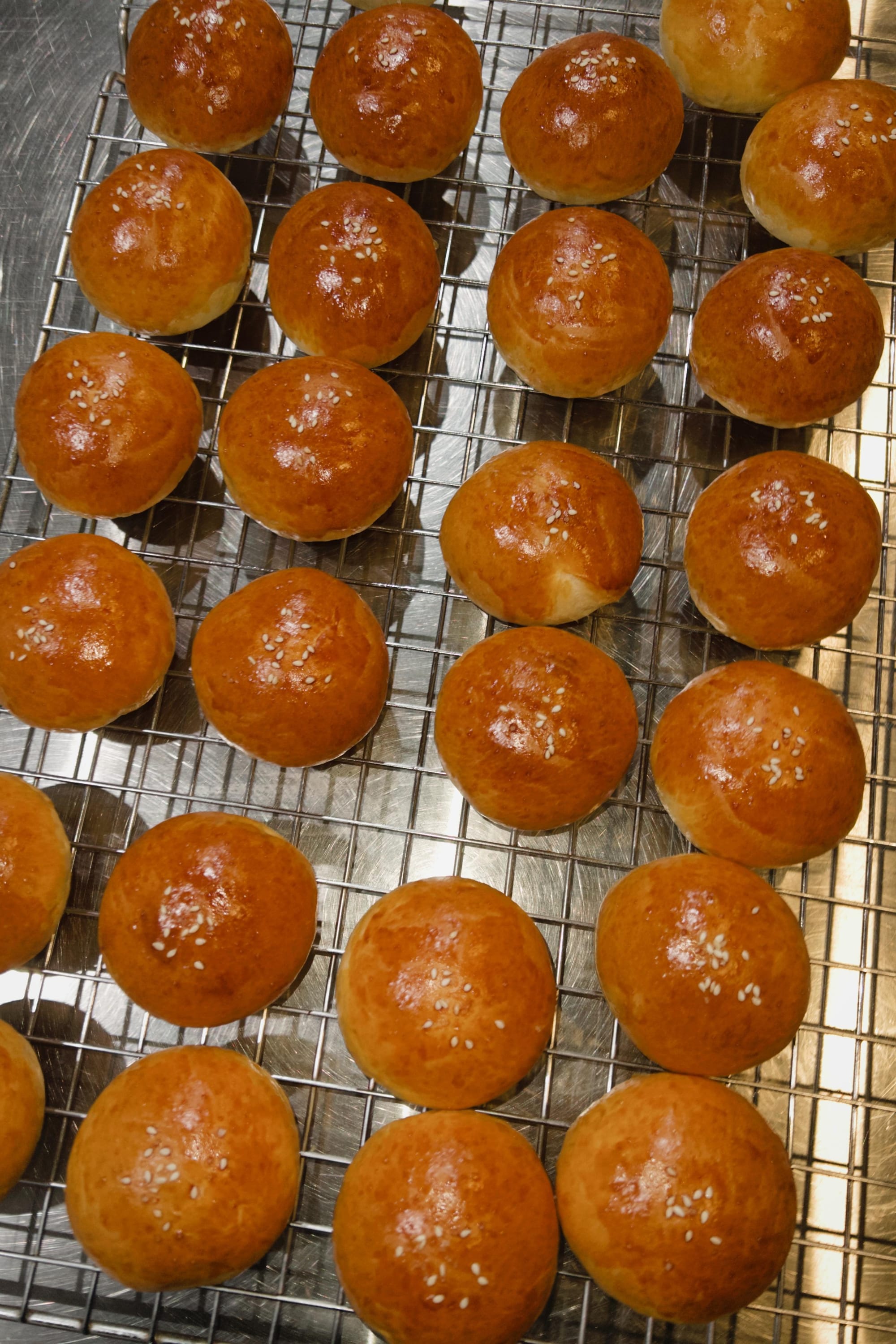
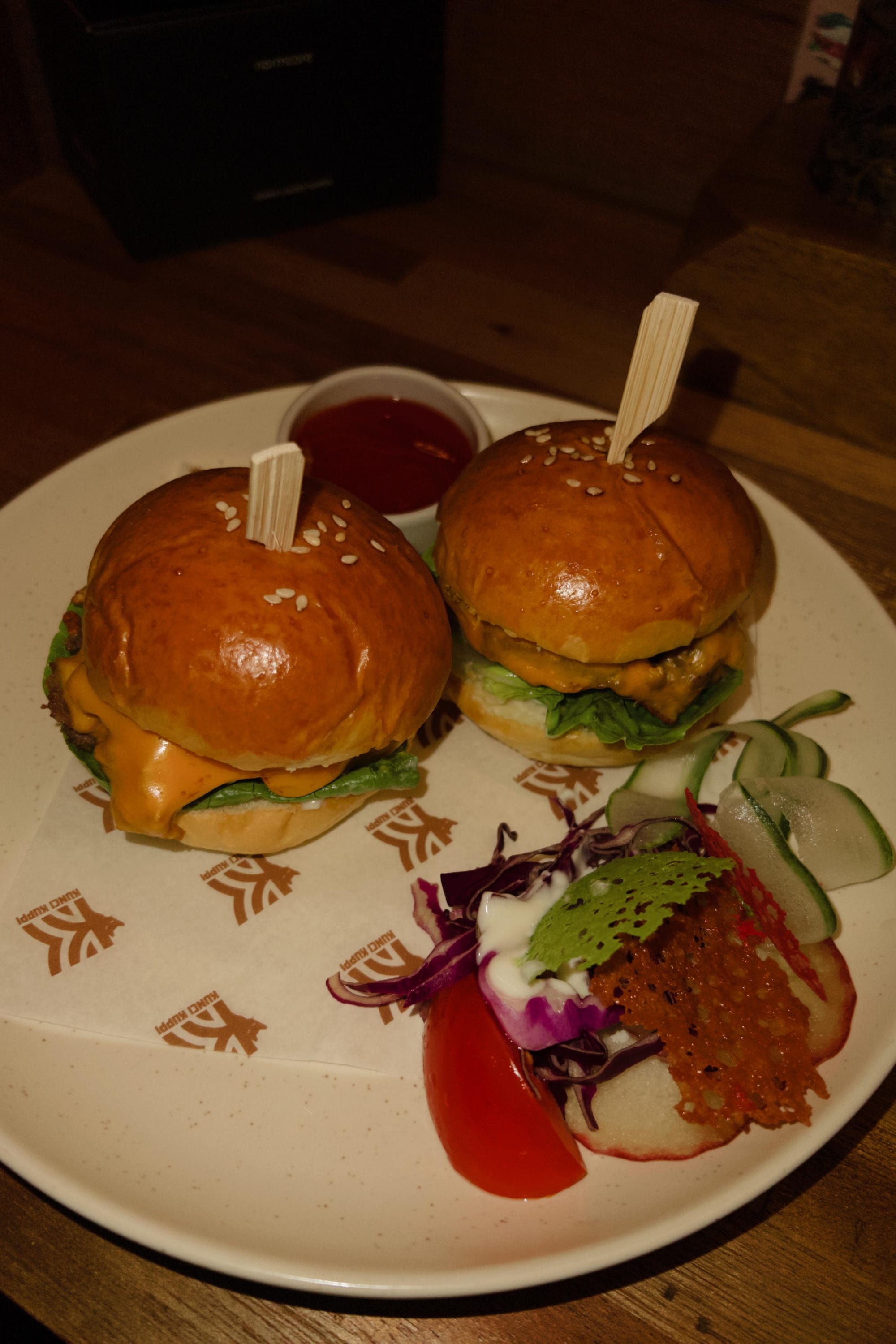
We started developing our own Milk Bun for the sliders at Kunci.
The idea was different from Shokupan, but we were looking for some of the same things: a bun that stays soft and light, but still has enough structure to hold the sauce, protein, and everything our hot kitchen puts inside it.
Because once the bread becomes part of a dish, it cannot only be good on its own. It has to work with everything around it too.
That eventually became the Milk Bun Sliders you see on our menu today.
Bánh Mì - Vietnamese Baguette
Our curiosity about Bánh Mì started while travelling in Ho Chi Minh City.
We tried it a few times during the trip, and what stayed with us was not only the filling, but the bread itself.
It was light, crisp on the outside, airy inside, and somehow still strong enough to hold everything together without feeling heavy.
It was one of those things we kept thinking about even after we came back home.


Back in Banyuwangi, we started exploring our own version.
The challenge was getting the bread right. We wanted that thin crisp crust, a light interior, and enough structure to hold everything inside without becoming too dense or too chewy.
From there, we kept adjusting the dough, fermentation, baking, and the balance of the fillings.
We never wanted to simply copy what we had in Vietnam. Instead, we took the experience that inspired us there and slowly translated it into something that felt natural to serve at Kunci Kuppi.


Interestingly, the same Bánh Mì dough later became the starting point for something completely different.
At the time, Banyuwangi was going through what we jokingly called our “winter” — a stretch of unusually cold weather, sometimes around 17°C.
And when the mornings and evenings started feeling that cold, we wanted something warmer and more comforting on the menu.
That was when the idea of a Bread Bowl came in.

And that is how Bánh Mì became more than just one bread in our kitchen — it became another starting point in our journey through food.We took the same dough we had been using for Bánh Mì and changed the shape and the way we baked it, so it could hold a warm filling while still keeping the lightness and crispness we liked from the original bread.
For a while, it became one of those menus people really enjoyed.
And we liked that one dough, which started from a trip to Ho Chi Minh City, somehow ended up becoming something completely different because of a cold season back home in Banyuwangi.
Bread, Coffee, and Kunci Kuppi
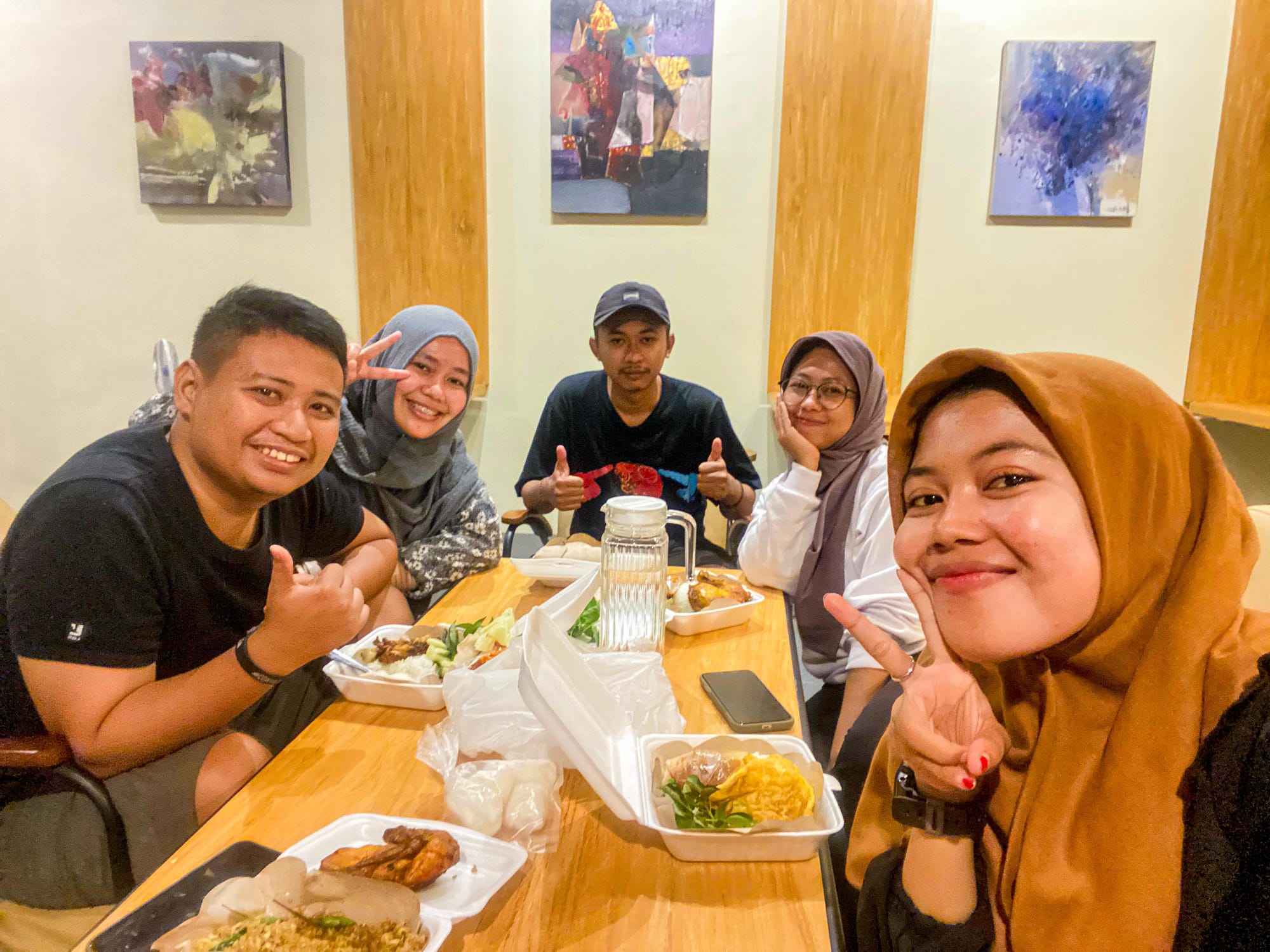
Looking back now, almost three years later, there is a lot we feel grateful for.
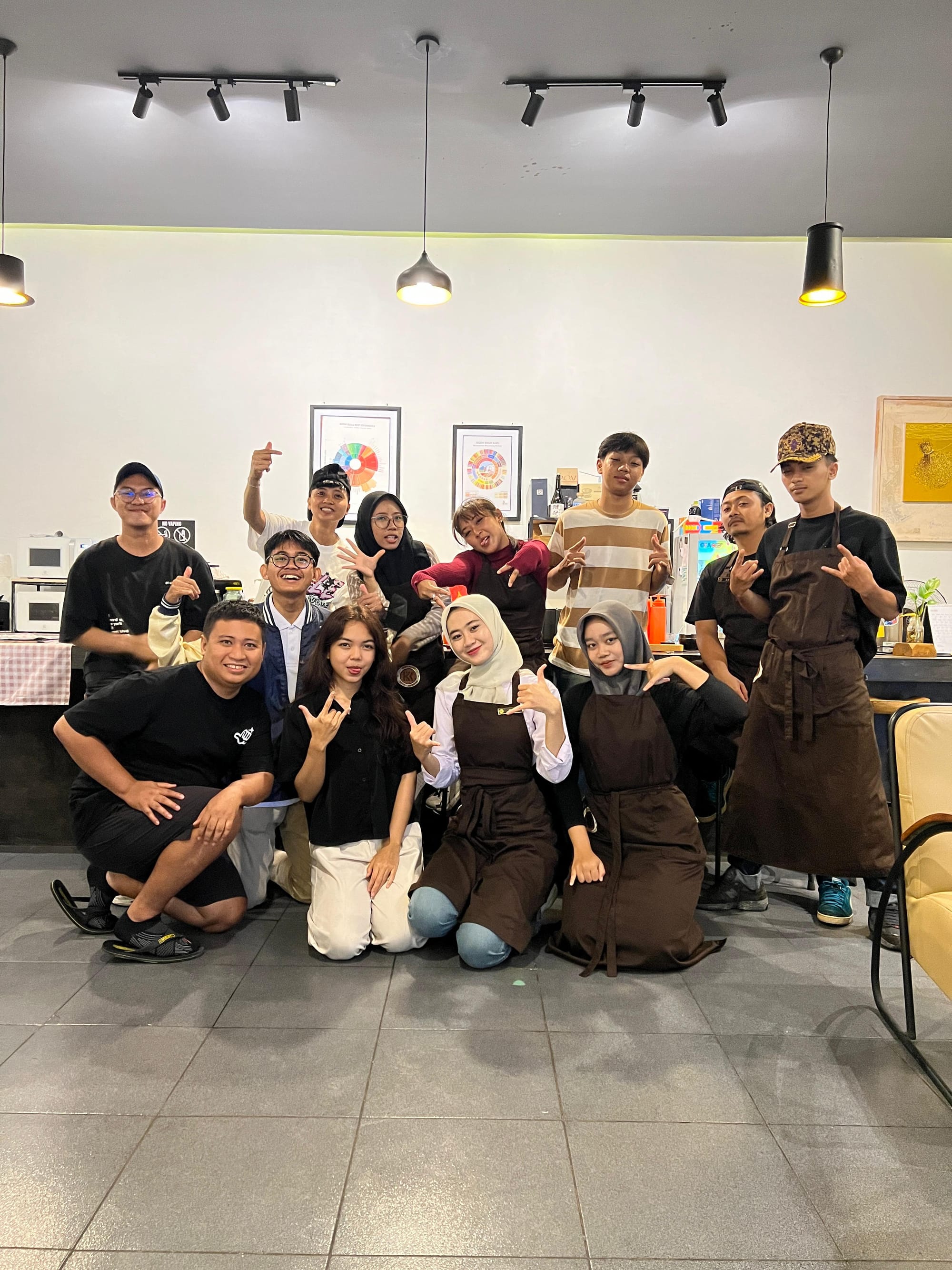
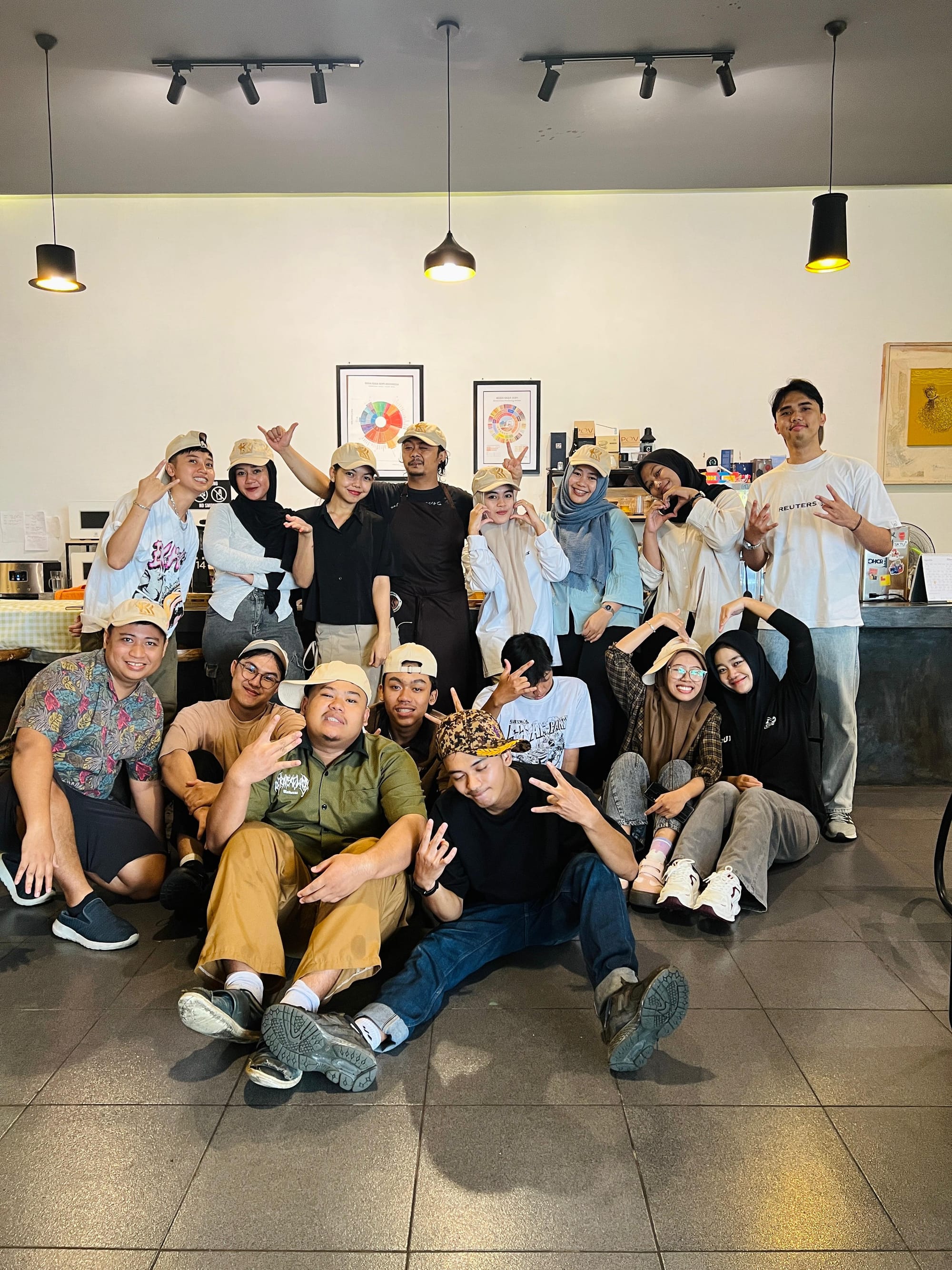
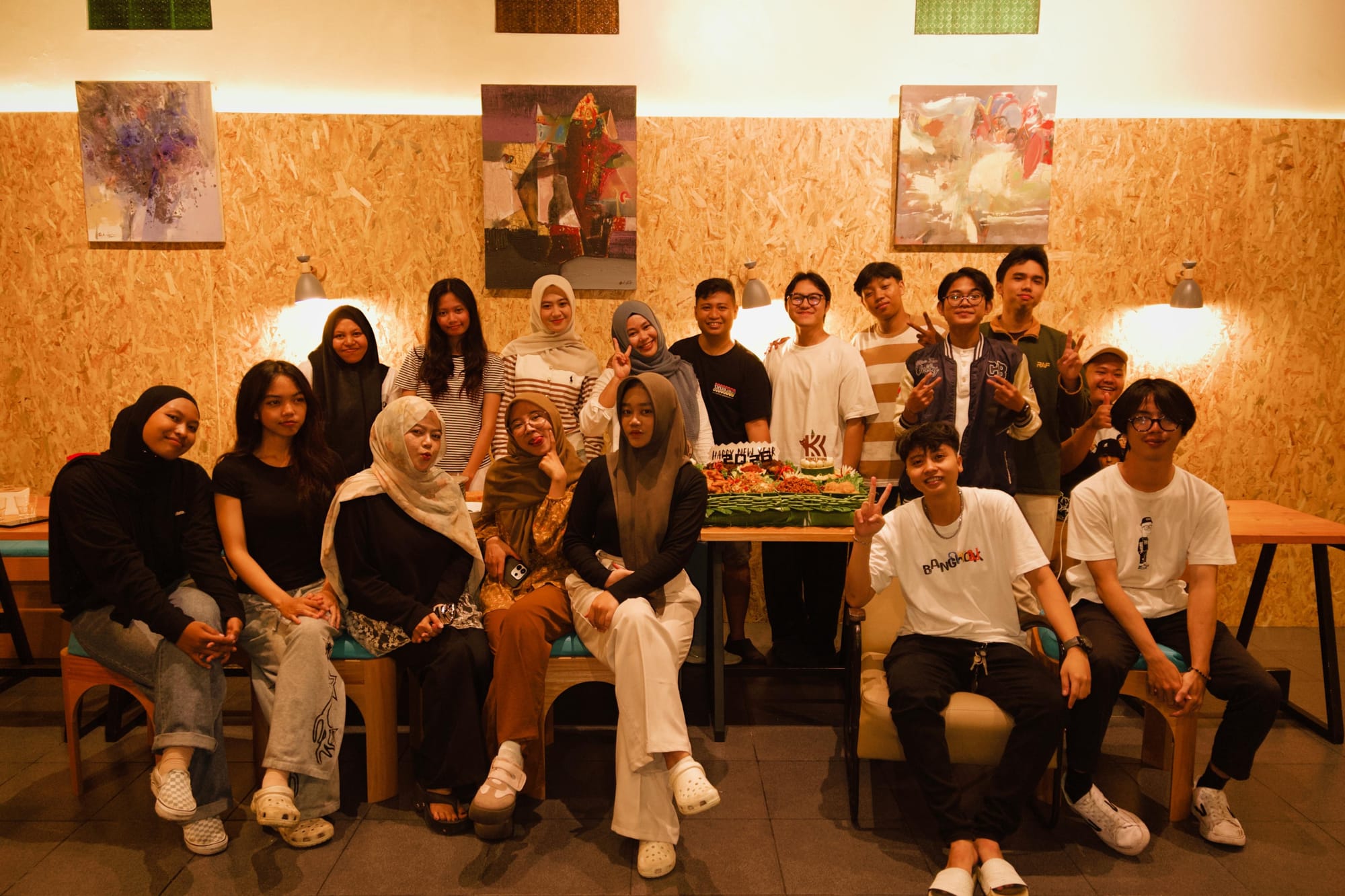
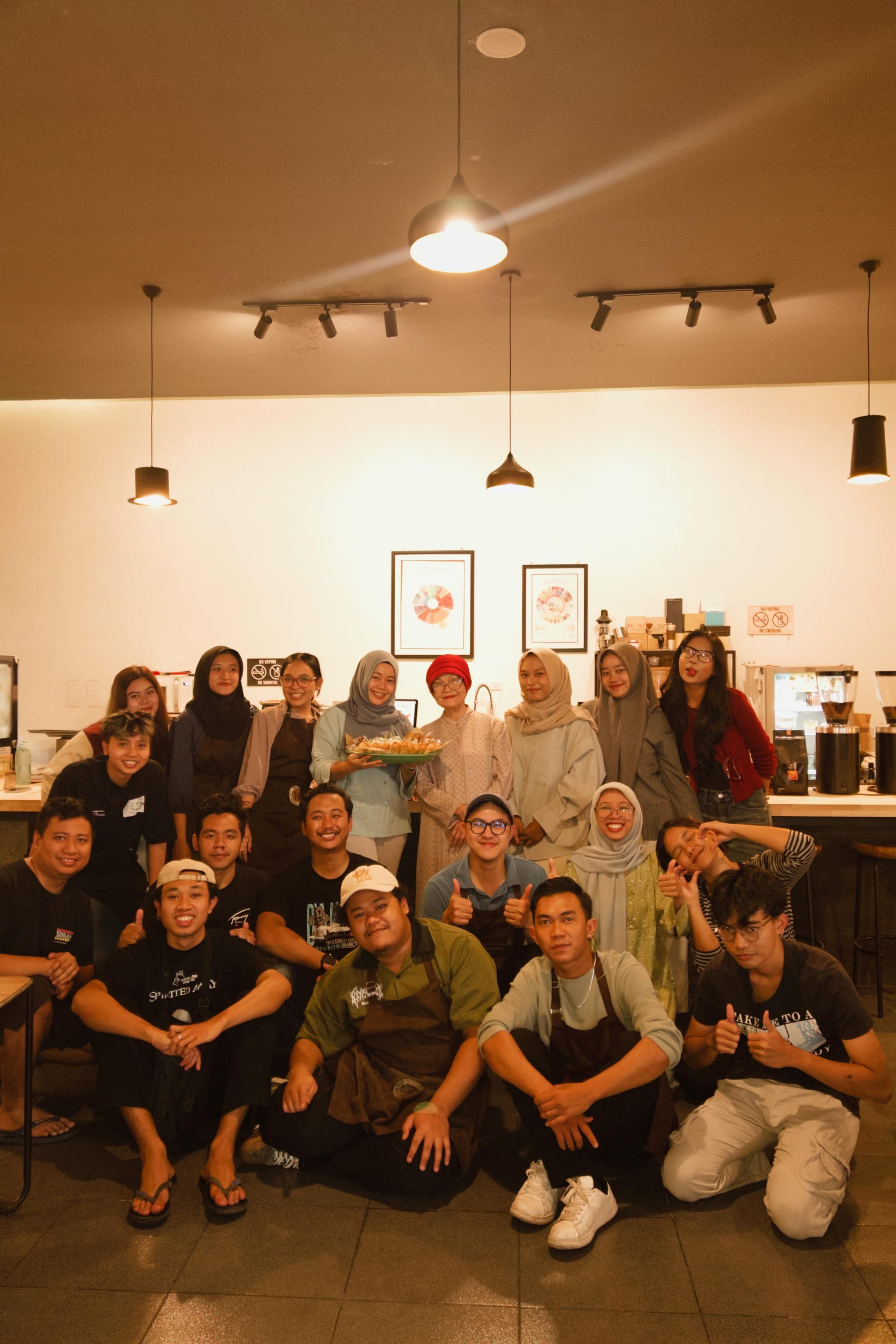
There was a time when Kunci was just around three of us doing almost everything together. Today, there are around 14 people behind it.
And when we say that, it is not really the number that makes us proud.
It is seeing how something that used to be handled by only a few hands has slowly grown into a team. Someone is working on the bread, someone on coffee, someone in the hot kitchen, someone preparing the sauces, proteins and ingredients that eventually bring all of those things together on a plate.
Even the bread does not really belong to the bakery alone anymore. What comes out of the oven can become something completely different once it reaches the hot kitchen, combined with the ingredients we source from growers and producers around us.
We often talk about Kaizen at Kunci, and looking back, maybe this is what it has looked like for us all along. We learn something, change a little, make mistakes, try again, and somehow keep moving.
And through all of that, people kept coming.
Some of you have been here since Kunci was still very small. Some came much later. You tried our new ideas, told us when something was good and also when something was not, brought your friends and family, and trusted us enough to keep coming back.
For that, truly, thank you.
Almost three years later, we are proud of what Kunci has grown into.
But there are still so many things we want to learn, make, and do better.
So I guess we are not done yet.


If you have made it this far, thank you for reading our bread story.
There are still many parts of Kunci we have not talked about yet.
Our desserts and pastries have their own long list of trials, changes, and small discoveries. The same goes for our hot kitchen, where a lot of these breads eventually meet sauces, proteins, and ingredients from around us.
And of course, there is still the bar — the coffee, the drinks, and all the things we have learned there over the years.
We will probably tell those stories another time.
For now, this is the story of how bread slowly became part of Kunci Kuppi.
And somehow, we are still only getting started.
